Learning from nature is something that fascinates me, and the only way to overcome this is to share and teach something to young people, so that they too have the opportunity to enjoy the best that our world has to offer. It’s a non-renewable habitat, but once we understand its importance, we can take care of it. It was at Colinas do Tejo, a place to rediscover lost rhythms, love nature and live life.

Colinas do Tejo is located in the town of Mouriscas, in the village of Cascalhos, about 9 km upstream from the city of Abrantes on the right bank of the River Tagus. This is the name of this small farm located by the river, where you can observe nature from a close distance. It is made up of centenary olive trees, among other native flora such as the lodão-bastardo, the aderno-de-flehas-largas, oak trees, citrus trees and the cultivation of aromatic herbs. Next to the Tagus, it has a beach where the riverbanks are lined with large ash trees, black poplar trees, willow trees and rowan trees. It’s a place where you can watch a thousand and one birds… not quite, but quite a few… woodpeckers, kingfishers, storks, eagles, tits and many others.
Among the various activities practiced, I can highlight the accommodation of visitors in wooden houses, camping, caravanning, construction and reconstruction of traditional Tagus boats and kayaks. Organization of various activities such as hiking, mountain biking, kayaking, tree climbing, wildlife watching, organization of study visits and other events, “educational trails” and also actions to defend and conserve the natural heritage.
It was there that I had the opportunity to get to know the Jardim do Monte School, the teachers, assistants, parents and friends and, of course, the children. This school is based on Waldorf pedagogy, they learn to understand and respect nature, in nature, the arts, painting, music and so many other things.
“In reality, at school we shouldn’t learn in order to know, but so that we can always learn from life” – Rudolf Steiner.
One of the things that fascinated me most about this teaching methodology was the care and respect for others. There seems to be no room for major conflicts and friendship seems to flourish in a tender way. I didn’t hear any teachers or assistants shouting, I didn’t see any cell phones and I saw a lot of happiness in this end-of-year activity. It was contagious!

Of course I saw the kids playing ball, hide-and-seek and other games, playing the guitar and other musical instruments. I also saw them chasing after bugs, but very carefully, the aim was to observe and not kill.
In the Tagus Hills they interacted with the land, the water and felt the freedom of walking in the countryside. We took them kayaking on the River Tagus. But first they were given a brief explanation and warmed up by João Gouveia, the host of Colinas do Tejo.

Then, paddles and kayaks out onto the water, while some made the journey, the others discussed their surroundings. They asked questions and looked for answers.

We were able to observe the short-toed eagle, the round-winged eagle, the black kite and wild ducks with their young. Herons, storks, bee-eaters, a woodpecker and many other birds. I told them a little about an encounter I’d had with a fox a few days ago in the same place.

We talked about the trees that make up riverbanks and their importance. We noticed that there were aquatic plants there. We saw fish jumping in the water. One child said to me, “It’s like we’re in another country… you’d think, wouldn’t you? I think I was really enjoying it.
A bush lizard…

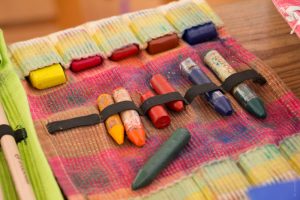
There they also did a bit of art, a white wall, some scratches and let their imagination and creativity flow! It was good to see them painting! There were many moments of conviviality and conversation. Before bedtime, there was a musical and convivial moment; it was good to hear them sing.

The week went by in a flash, but here’s a very brief record of what this activity was like.

One last photo… our beautiful Tagus River!

Cheers!
This story was originally shared on respiranatureza